Batch One Is a Bet: How UK Buyers Can Structure Chinese CNC MOQs

Photo: UK engineer reviewing CNC machining quotation and batch quantities on desk, via facts.net
The default MOQ is a risk transfer
When a Chinese CNC supplier quotes a minimum order quantity, it is rarely being obstructive. It is protecting itself against setup time, fixture making, material minimums and the disruption of small batches on a production schedule. That logic is sound for the factory. For a UK SME, however, the same MOQ can turn a manageable first article into an inventory and cash-flow problem. The first order is where design uncertainty, process uncertainty and supplier uncertainty are at their highest. Treat batch one as a bet unless you deliberately structure it otherwise.
What sits inside the quantity break
A useful quotation separates one-off costs from recurring costs. Ask for a table showing setup and programming, tooling or fixture cost, material minimum, first article inspection, unit machining price and finishing price at several quantities. Without that split, a low unit price can hide a tooling charge that has been spread across an order you may never repeat.
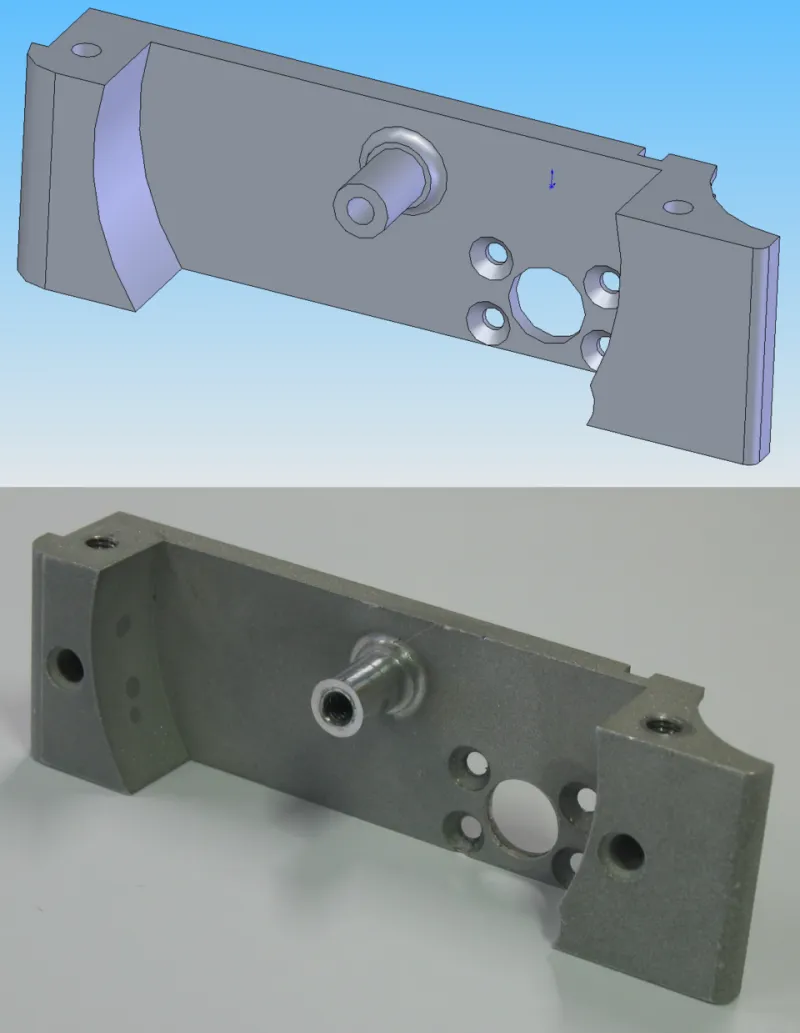
Take a 6082-T6 aluminium bracket, anodised, with a handful of critical dimensions. A supplier might quote GBP 22.10 each at 100 off, GBP 15.90 at 500 and GBP 13.40 at 1,000, with tooling at GBP 1,800. At 100 units the tooling adds GBP 18 per part; at 1,000 it adds GBP 1.80. The unit price falls sharply. The cash exposure moves in the opposite direction: roughly GBP 4,010 for the 100-off route against GBP 15,200 for the 1,000-off route. If a drawing revision lands after the first batch, the larger order is the more expensive mistake. The decision is not the unit price; it is the cost of being wrong.
Amortise tooling without giving it away
Tooling should be a separate, visible line. Ask whether it is dedicated to your part, who owns it, what its expected life is and what replacement would cost. If the supplier insists on burying tooling inside the unit price, you may pay for the same fixture on every repeat order. A better arrangement is a separate tooling invoice with a defined amortisation schedule across the first two or three releases. For straightforward fixtures, UK buyers commonly see figures in the low thousands of pounds; complex work will be higher. The point is not to negotiate the tooling to zero. It is to know what you are buying and what happens if you move the part.
The paid bridge run
Rather than choosing between 100 and 1,000, ask for a paid bridge run of 200 to 250 pieces at an interim price. This is not a free sample. It is a production run using the intended tooling, material and process, which is precisely why it is useful. In the bracket example, a bridge run at GBP 18.20 each plus GBP 1,800 tooling gives a cash exposure of about GBP 5,440. It validates the process, provides saleable stock and preserves the option to scale. Make the bridge run conditional on a first article report, material certificate and a fixed quantity-break table for the following twelve months. A supplier who will not support that structure is telling you something useful about how it views repeat business.
Staged releases and call-offs
Negotiate MOQ per part number per release, not per order. An annual call-off schedule with a firm short horizon and a longer forecast can give the factory planning confidence without forcing you to own the whole batch. Chinese suppliers will often accept this where the forecast is credible and the deposit covers material. Clarify the cancellation window, price validity and any material surcharge. Also confirm whether the stated MOQ applies to each shipment or to the contract as a whole; the difference matters when you are managing warehouse space in the UK.
A short negotiation checklist
- A quantity-break table with one-off and recurring costs separated.
- Tooling cost, ownership, expected life and replacement price.
- MOQ defined per release and per part number.
- A bridge-run price and how long it remains valid.
- First article inspection and material certification included.
- Price validity, cancellation terms and payment milestones.
The disciplined first order
The lowest unit price can be the most expensive decision in the file. A transparent tooling line and a paid bridge run let a UK workshop test a Chinese supply route without betting the business on batch one. Scale should follow evidence, not precede it.