Second in the Queue: Holding Machine Time in a Chinese CNC Shop
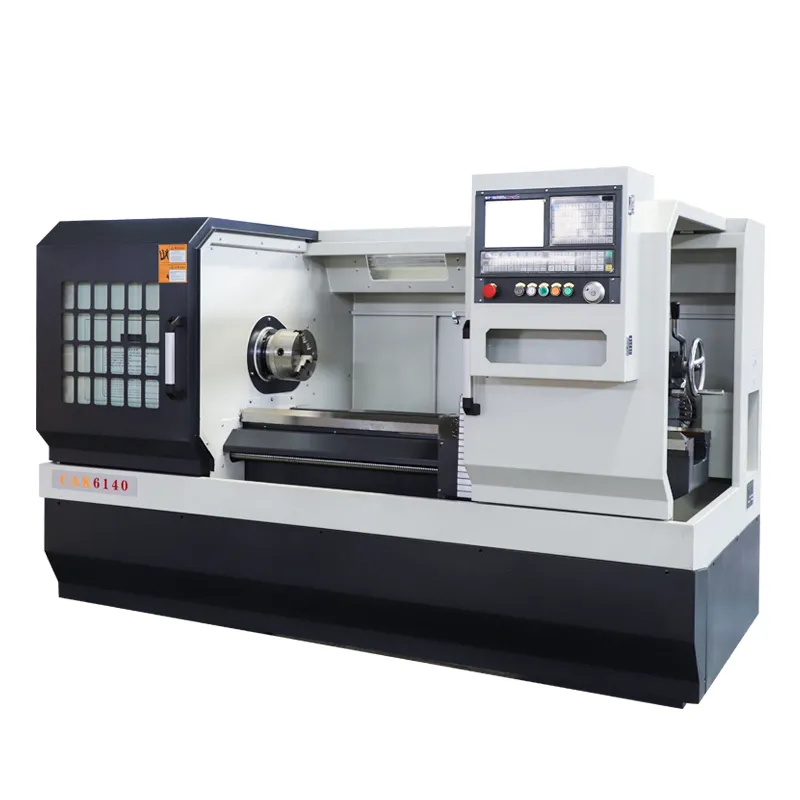
Photo: Zhejiang Balford Mechatronics Co., Ltd., CC BY-SA 4.0, via Wikimedia Commons
A confirmed purchase order feels like a reservation. In most UK manufacturing relationships it is one: the supplier accepts the work, plans the machine, and the date holds unless something breaks. In Chinese CNC supply, a purchase order is better understood as an entry in a conversation about capacity. It establishes intent and usually money, but it does not, by itself, secure a spindle. Understanding why that is the case — and what can be done about it — is one of the more useful pieces of procurement knowledge a UK buyer can acquire.
The order book is not a queue
It is tempting to picture a Chinese CNC shop as a queue: orders arrive, they are placed in sequence, and each is machined in turn. In practice, most shops run a mixed model. A small number of anchor customers — often domestic OEMs, long-standing export accounts, or buyers with repeat programmes — receive protected slots. Around them, the shop fits project work, prototype batches and one-off orders into whatever gaps the schedule allows. The gaps are real, but they are not advertised, and they move.
This allocation model is rational from the supplier’s perspective. Anchor customers provide forecastable revenue and often fund material in advance. Project work provides margin. A new overseas buyer with a single order and a tight deadline sits somewhere between the two: welcome, but not yet proven. The shop will quote, accept the order and promise a date in good faith. Whether that date survives depends on what else arrives between acceptance and production.
The practical consequence for UK buyers is that a purchase order does not create capacity. It creates an obligation to try. The distinction matters most in the weeks before a scheduled shipment, when a larger or more familiar customer asks for an earlier slot and the shop has to choose.
What a lead-time promise actually encodes
Lead times in Chinese CNC quotations are rarely calculated from a formal capacity model. They are estimates assembled from experience: current loading, material availability, the likely complexity of the part, and an allowance for disruption. A supplier quoting four weeks in a quiet period may quote the same four weeks when the shop is full, because the quotation is a commercial document first and a scheduling document second.
Read the wording closely. Phrases such as “subject to final capacity confirmation”, “lead time starts after drawing approval and deposit”, or “production slot to be advised” are not evasions. They are accurate. They tell you that the date is conditional on factors the supplier has not yet resolved. A quotation that names a specific machine, a specific start week and a specific completion week is making a stronger commitment, and it is worth asking why that supplier feels able to do so.
Seasonality compounds the problem. Chinese New Year creates a well-known bottleneck, but it is not the only one. The autumn export rush, summer heat restrictions in some industrial regions, and the periodic tightening of environmental inspections all affect machine hours. A lead time promised in October for delivery in January is being promised across two of the more difficult periods in the calendar.
Three signals available before you pay
Capacity pressure leaves traces before production begins. The first is quotation turnaround. A shop that responds within two working days is likely to have estimating capacity and, by extension, some scheduling slack. A shop that takes ten days is either busy or under-resourced; both affect your order.
The second is the deposit request. Material deposits are normal. A request for a deposit materially above the cost of material — or a request to pay for machine time separately — suggests the supplier is managing cash flow and may be prioritising customers who do the same. That is not necessarily a warning, but it is information.
The third is responsiveness during the pre-production phase. A supplier that answers drawing queries promptly, returns a first article programme without chasing and confirms material certificates early is demonstrating that your order is visible on the shop floor. Silence in this phase often predicts silence later.
The instruments that buy certainty
There are legitimate ways to move from the general queue into a protected slot, and most of them involve giving the supplier something it values: predictability. A rolling forecast is the simplest. Even a non-binding six-month view of likely part numbers and volumes helps the shop plan material and machine time, and it costs the buyer little. The forecast should distinguish firm orders from indicative ones, and it should state the conversion window — the point at which an indicative line becomes a purchase order.
A capacity deposit is a more direct instrument. Paid separately from the material deposit, it reserves a defined block of machine time for a defined period. The terms matter: the deposit should be creditable against future invoices, refundable if the supplier misses the window, and clearly linked to a named production slot rather than a general promise. Not every supplier will accept such an arrangement, but the conversation itself reveals how the shop thinks about capacity.
A named production window in the purchase order is the contractual version of the same idea. Instead of “delivery within six weeks”, the order specifies a start week and a completion week, with the supplier confirming the machine and the responsible production planner. This is harder to obtain from a trading company or a broker, which is one reason to prefer suppliers with visible machining assets.
Named windows and the discipline of the rolling forecast
A named window is only useful if both sides treat it as real. UK buyers should be prepared to confirm material release dates, approve drawings within an agreed period, and avoid late changes that force the shop to reschedule. In exchange, the supplier should agree to notify any slippage as soon as it is known, not when the shipment date arrives.
Rolling forecasts work best when they are modest. A forecast that promises volumes the buyer cannot absorb is worse than no forecast at all; it trains the supplier to discount everything the buyer says. A conservative forecast, updated monthly and converted to orders on a predictable rhythm, gives the shop something it can plan around and gives the buyer a credible claim on future capacity.
When to walk
Not every capacity problem can be solved by better instruments. If a supplier cannot name a production window, will not discuss a capacity deposit, and responds slowly during the quotation phase, the order is likely to remain in the gaps. That is not a moral failing; it is a business model. The appropriate response is to price the risk into the delivery buffer, split the order across two suppliers, or place the work elsewhere. The buyer who understands how capacity is allocated is less likely to mistake a purchase order for a reservation — and more likely to secure the slot that the schedule actually contains.